
DATE
TBA 2027
TIME
9-1:30 CDT
COURSE FEE
$180
CONTINUING EDUCATION
4 CE DIAGNOSING HOURS NBCC APPROVED · 4 CE CLINICAL HOURS OFFERED BY ASWB ACE
Course overview
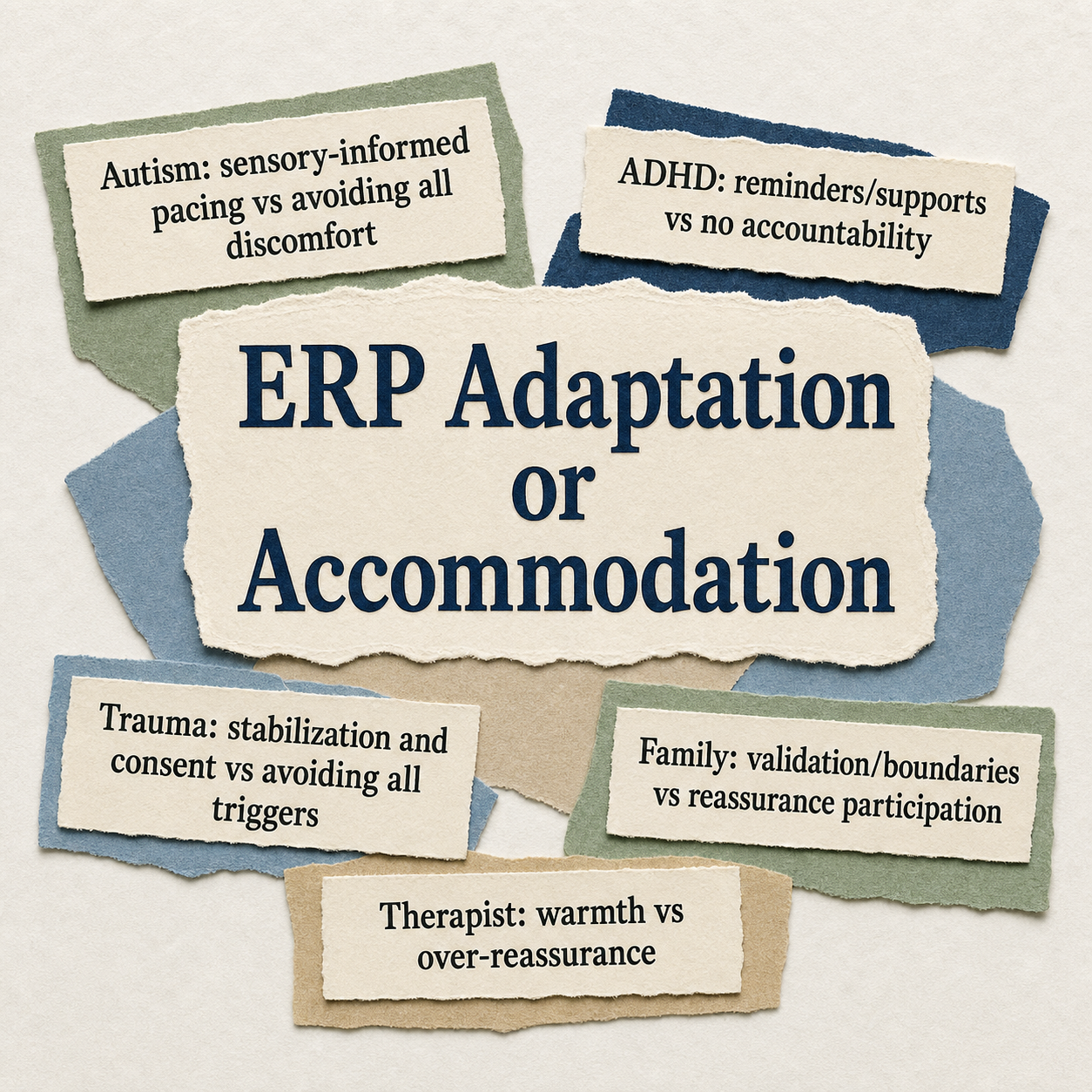
Refine ERP delivery when OCD treatment is complicated by co-occurring conditions, family accommodation, sensory needs, or treatment-interfering behaviors. Foundational ERP knowledge is recommended.
COURSE OBJECTIVES
Participants will:
-
Identify core barriers to effective ERP-including low motivation, high symptom intensity, limited insight, treatment-interfering behaviors (TIBs), family accommodation, therapist avoidance, and cultural mismatch.
-
Formulate individualized case conceptualizations that reframe these barriers through a dual-diagnosis lens (adult-diagnosed Autism/ASD, ADHD, PTSD, MDD, OCPD, BPD) and relevant cultural/sensory factors.
-
Select and deliver in-session, evidence-based tactics-trauma-informed ERP, sensory-informed planning, executive-function scaffolds, and ACT/DBT skills-that preserve response prevention.
-
Design exposure hierarchies that maximize inhibitory learning and values alignment for presentations with low insight, high arousal, or ego-syntonic obsessions.
-
Coordinate multidisciplinary care-pharmacotherapy, family work/accommodation reduction, and collaboration with other providers-to sustain ERP gains and reduce relapse risk.
-
Demonstrate the art and discipline of ERP by running exposures consistently and flexibly, “no matter what,” amid comorbidity and uncertainty, while tracking outcomes to guide next steps.
Full course description
Mastering OCD Cases is advanced ERP training for clinicians who understand exposure and response prevention and want to apply it more effectively in complex cases. The course examines how symptom intensity, limited insight, trauma, neurodevelopmental differences, family systems, and cultural context affect treatment.
Participants connect dual-diagnosis case conceptualization with trauma-informed planning, sensory supports, executive-function scaffolds, and ACT/DBT skills while preserving response prevention. Exposure design emphasizes inhibitory learning, values alignment, collaboration, and outcome tracking rather than treating complexity as a reason to abandon ERP.
Topics and agenda
Clinical topics
- Barriers to ERP: low motivation, limited insight, high symptom intensity, treatment-interfering behaviors, family accommodation, and therapist avoidance
- Cultural mismatch, ego-syntonic obsessions, high arousal, and dissociative tendencies
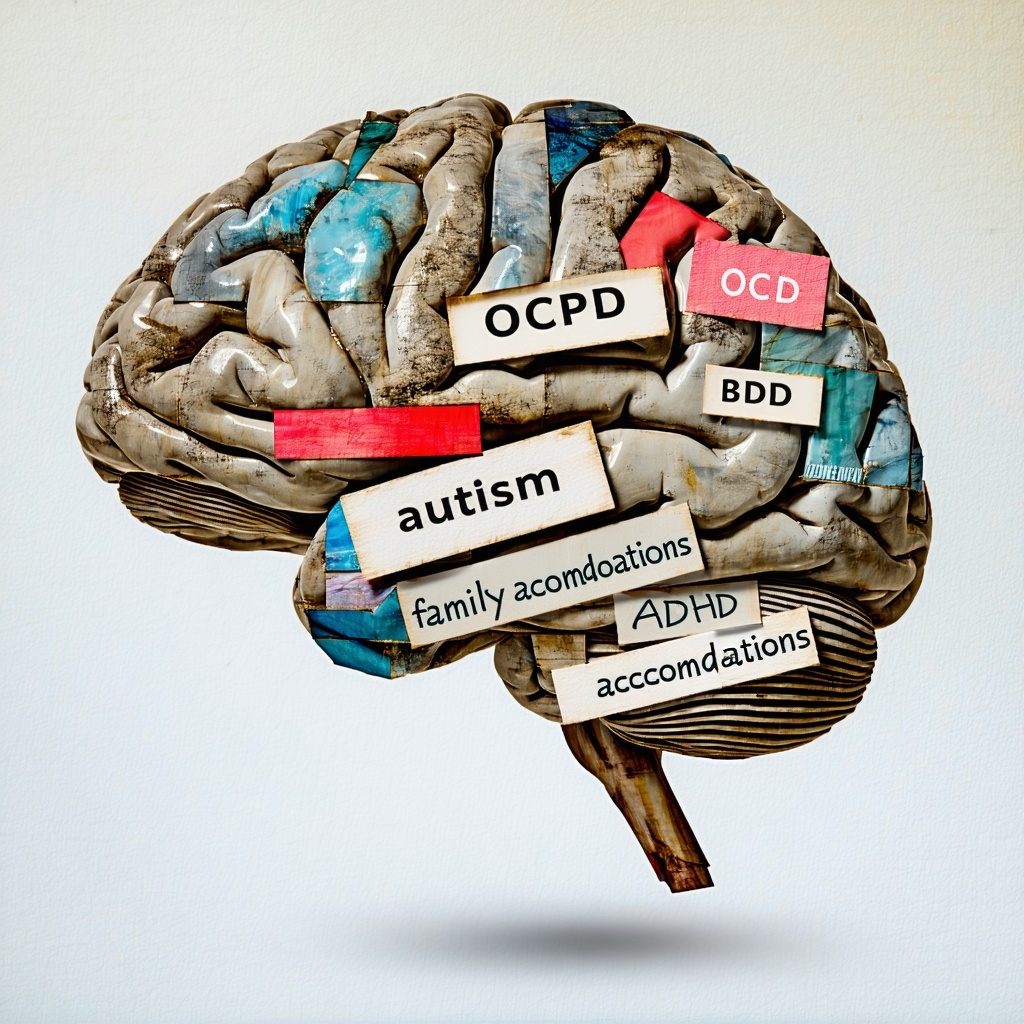
- Co-occurring autism, ADHD, PTSD, MDD, OCPD, and BPD
- Trauma-informed ERP, sensory-responsive pacing, executive-function supports, and ACT/DBT skills
- Exposure design: fear expectancy, safety behaviors, distress tolerance without ritualization, and values-driven motivation
- Multidisciplinary care, accommodation reduction, and measurable treatment outcomes
Class agenda
9:00-10:00 Identify core barriers to effective ERP-including low motivation, high symptom intensity, limited insight, treatment-interfering behaviors (TIBs), family accommodation, therapist avoidance, and cultural mismatch.
10:00-10:30 Formulate individualized case conceptualizations that reframe these barriers through a dual-diagnosis lens (adult-diagnosed Autism/ASD, ADHD, PTSD, MDD, OCPD, BPD) and relevant cultural/sensory factors.
10:30-11:00 Select and deliver in-session, evidence-based tactics—trauma-informed ERP, sensory-informed planning, executive-function scaffolds, and ACT/DBT skills—that preserve response prevention.
11:00-11:30 LUNCH
11:30-12:00 Design exposure hierarchies that maximize inhibitory learning and values alignment for presentations with low insight, high arousal, or ego-syntonic obsessions.
12:00-12:30 Coordinate multidisciplinary care-pharmacotherapy, family work/accommodation reduction, and collaboration with other providers-to sustain ERP gains and reduce relapse risk.
12:30-1:30 Demonstrate the art and discipline of ERP by running exposures consistently and flexibly, “no matter what,” amid comorbidity and uncertainty, while tracking outcomes to guide next steps.
Who should attend
This ERP training is designed for:
-
Licensed Professional Counselors (LPCs)
-
Licensed Clinical Social Workers (LCSWs)
-
Psychologists
-
Marriage and Family Therapists (LMFTs)
-
Clinicians with foundational ERP knowledge seeking advanced competency
Foundational ERP training is recommended prior to attending.
CONVERSATIONS FROM THE COLLECTIVE
Explore the video library.
Understanding OCD Subtypes
KD and Monet explore common OCD subtypes and how they present in clinical practice.
ENROLL EXCLUSIVELY IN
MASTERING OCD CASES: ADVANCED ERP TRAINING FOR DUAL DIAGNOSIS AND TREATMENT-INTERFERING BEHAVIORS
$180 for 4 CE Hours
Meet your instructor.
KD Holmes, MS, LPC, EMDR CERTIFIED
KD (she/her) is a practicing therapist over the past 20 years at KDH Counseling. She has worked extensively with Generalized Anxiety Disorder, Social Phobia, Specific Phobias, Obsessive Compulsive Disorder, and Post Traumatic Stress Disorder.
Full bio
KD (she/her) is a practicing therapist over the past 20 years at KDH Counseling. She has worked extensively with Generalized Anxiety Disorder, Social Phobia, Specific Phobias, Obsessive Compulsive Disorder, and Post Traumatic Stress Disorder. She is Eye Movement Desensitization and Reprocessing Certified, and BTTI trained for treatment of OCD. She enjoys using biology as a foundation to guide behavioral approaches to treating mental health issues. She loves DBT, RODBT, and ERP because they address mental health treatment through tangible behavioral steps. Followed by trauma work that can be done through EMDR, and Deep Brain Reorienting to help treat trauma responses that may be contributing to the presenting problems. We never stop learning and this insatiable quest for learning continues to drive her personally and professionally.
Linkedin Facebook Instagram YouTubeCE approval details
NBCC / ACEP No. 7323

KDH COLLECTIVE ACEP NO. 7323
KDH COLLECTIVE HAS BEEN APPROVED BY NBCC AS AN APPROVED CONTINUING EDUCATION PROVIDER, ACEP NO. 7323. PROGRAMS THAT DO NOT QUALIFY FOR NBCC CREDIT ARE CLEARLY IDENTIFIED. KDH COLLECTIVE IS SOLELY RESPONSIBLE FOR ALL ASPECTS OF THE PROGRAMS.
ASWB ACE / Provider No. 2506

KDH COLLECTIVE PROVIDER #2506
KDH COLLECTIVE PROVIDER #2506, IS APPROVED TO OFFER SOCIAL WORK CONTINUING EDUCATION BY THE ASSOCIATION OF SOCIAL WORK BOARDS (ASWB) APPROVED CONTINUING EDUCATION (ACE) PROGRAM. REGULATORY BOARDS ARE THE FINAL AUTHORITY ON COURSES ACCEPTED FOR CONTINUING EDUCATION CREDIT. ACE PROVIDER APPROVAL PERIOD: 09/30/2026 - 09/30/2029. SOCIAL WORKERS COMPLETING THIS COURSE RECEIVE 4 CLINICAL CONTINUING EDUCATION CREDITS.
Registration and accessibility
For LPCs, LMHCs, LCPCs, PLPCs, LMSWs, LCSWs, LMFTs, and other state-credentialed counselors
ADA NEEDS:
We would be happy to accommodate your needs.
Contact us:
Registration Deadline closes at the beginning of course. This live webinar is hosted through zoom. Participants are responsible for ensuring their device and internet connection meet Zoom’s current system requirements. System Requirements for Zoom
Your information is handled according to our Privacy Policy.
Questions and concerns
Your satisfaction is our goal and our guarantee. Concerns should be addressed to:
KDH Collective 4906 Ambassador Caffery Pkwy, Bldg I Lafayette, La 70508 337-895-0300 [email protected]Refund policy
We work hard to ensure the quality of our courses and educational materials. If you would like a refund, please email your request with an explanation to [email protected] within 48 hours of the live course, and we will review the refund request.
Attendance and certificate requirements
To successfully complete this course and receive a certificate of completion / continuing education credit, participants must:
-
Attend the full live webinar course from start to finish.
-
Submit evaluations forms. (Completion of the evaluation is a required step before certificates are issued.)
- CE credit certificates will be emailed within a week of attending course and completing evaluations.